Robert the Bruce and Rathlin Island
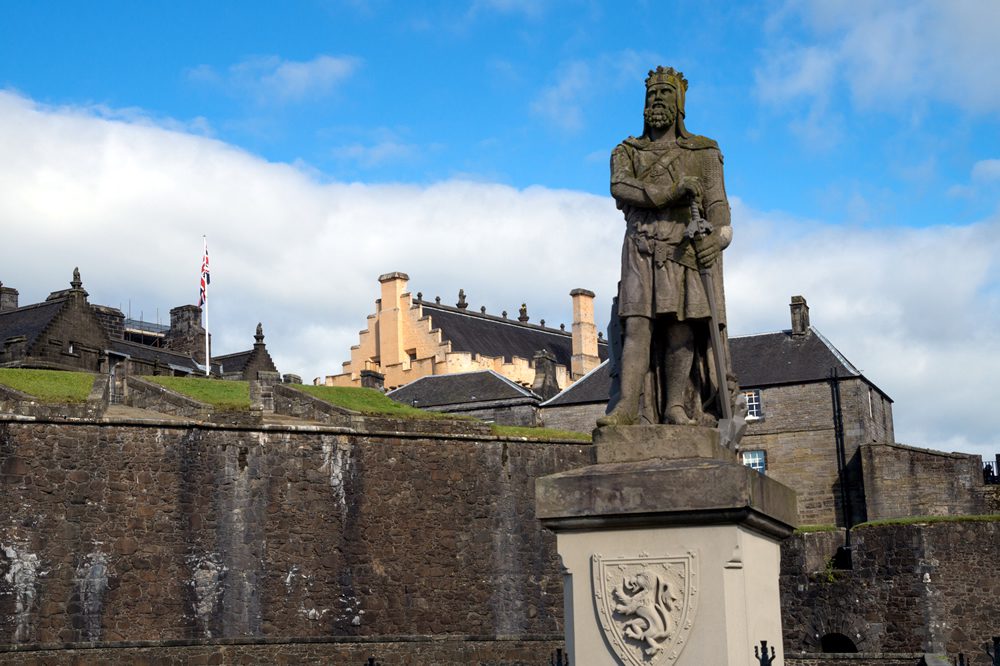
Of all the famous visitors to Rathlin Island across its long history, none is more celebrated than Robert the Bruce — the man who would become King Robert I of Scotland. His time on Rathlin, though brief, gave rise to one of the most enduring legends in British history.
Defeat and Exile (1306)
In 1306, Robert the Bruce was in a desperate position. Having recently been crowned King of Scots at Scone, he had suffered a series of crushing military defeats at the hands of the English forces loyal to King Edward I. His army was scattered, his supporters captured or executed, and his own life was in danger. With nowhere safe to turn on the Scottish mainland, Bruce made the decision to flee across the sea.
Rathlin Island — just 15 miles from the Mull of Kintyre on the Scottish coast — offered a natural refuge. The island was remote, difficult to access in rough weather, and beyond the immediate reach of English forces. Bruce and a small group of followers crossed to Rathlin and took shelter in a cave on the island’s eastern cliffs, a site now known as Bruce’s Cave.
The Legend of the Spider
It was during this period of hiding on Rathlin that the most famous episode in Robert the Bruce’s story is said to have taken place. According to legend, as Bruce sat dejected in his cave, contemplating whether to abandon his struggle for the Scottish crown, he noticed a spider attempting to spin its web. The spider tried again and again to attach its thread, failing repeatedly — but each time it tried again. Eventually, after many attempts, the spider succeeded.
This simple act of perseverance made a profound impression on the exiled king. “If at first you don’t succeed, try, try again” — a principle that Bruce took to heart. He left Rathlin Island renewed in his determination, returned to Scotland, and ultimately led the Scots to their famous victory over the English at the Battle of Bannockburn in 1314, securing Scottish independence.
Visiting Bruce’s Cave Today
Bruce’s Cave can be visited on Rathlin Island today. It is located on the island’s eastern cliffs, not far from the East Lighthouse — the oldest of Rathlin’s three lighthouses. While the cave itself is relatively modest, the setting is dramatic and the views across the North Channel towards Scotland are spectacular. On a clear day, the Scottish coastline is plainly visible — the same view that Robert the Bruce would have seen as he contemplated his return.
Historical Significance
Whether every detail of the spider legend is historically accurate is debated by historians. What is certain is that Robert the Bruce did seek refuge in the area around Rathlin during the winter of 1306-07, and that he returned to Scotland the following spring to begin the campaign that would eventually lead to Scottish independence. Rathlin Island’s place in Scottish as well as Irish history is well-established.