Wildlife on Rathlin Island
Rathlin Island is one of the most important wildlife sites in the British Isles. Its dramatic cliffs, clean Atlantic waters, undisturbed grasslands and rich marine environment support an extraordinary diversity of species — from the iconic Atlantic puffin to the elusive Irish hare, from grey seals hauled out on rocky shores to dolphins visible from the ferry crossing.
The island is managed in part as an RSPB nature reserve, and its seabird colony — the largest in Northern Ireland — attracts tens of thousands of visitors each year, particularly during the April to August breeding season.
Seabirds
The cliffs on the western coast of Rathlin Island, open to the full force of the Atlantic Ocean, provide ideal nesting habitat for huge numbers of seabirds. Each spring, the cliff faces come alive with the sights and sounds of thousands of birds raising their chicks in densely packed colonies — an extraordinary spectacle described by visitors as one of the most memorable wildlife experiences in the British Isles.
Species nesting on Rathlin’s cliffs include:
- Atlantic puffin — the island’s unofficial emblem, present from late April to August
- Common Guillemot — thousands nest on the cliff ledges
- Razorbill — closely related to guillemots, nesting in crevices
- Kittiwake — the most numerous nesting species
- Fulmar — gliding effortlessly on cliff updrafts
- Northern Gannet — spectacular plunge-divers, often seen from the ferry
The RSPB Rathlin West Light Seabird Centre
The RSPB operates the West Light Seabird Centre at the western tip of Rathlin Island — about four miles from Church Bay harbour. The centre is open daily from late April to August and provides close-up views of the seabird colonies from a purpose-built viewing platform, reached by descending 98 steps down the cliffside. RSPB staff and volunteers are on hand with binoculars and telescopes to help visitors spot and identify the birds.
Entry to the centre costs £9 for non-RSPB members. The centre is also home to Rathlin’s famous upside-down lighthouse — a unique structure where the light is at the bottom rather than the top, built this way so it could be seen by ships below the line of the cliffs.
Mammals
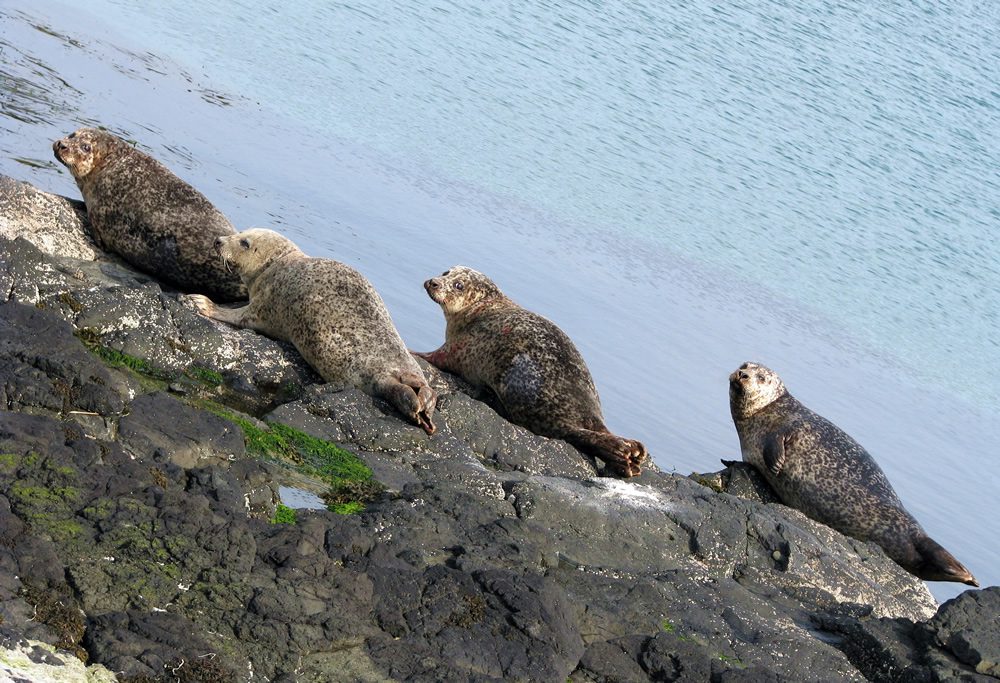
Grey seals and common seals are regularly seen hauled out on Rathlin’s rocky shores, particularly on the north and west coasts. The island is also home to the Irish hare — a subspecies of the mountain hare found only in Ireland — which can be spotted on the island’s open grassland and along the cliff tops. Otters are occasionally seen along the coastline.
Marine Wildlife
The waters around Rathlin Island are exceptionally rich in marine life. Common dolphins and harbour porpoises are regularly spotted from the ferry crossing and from the island’s cliffs. The clear, cold waters also support basking sharks during summer months. The seabed around the island — dotted with over 40 historic shipwrecks — provides habitat for a rich array of marine invertebrates and fish.
Flora
Despite its exposed Atlantic position, Rathlin Island supports an astonishing variety of plant life — over 500 species have been recorded. In spring, the island’s grasslands and clifftops are carpeted with primroses, violets, celandine and early purple orchids. Summer brings heathers, gorse, valerian, wild honeysuckle and montbretia. The island’s diversity of habitats — from clifftop grassland and lakes to coastal heath and agricultural land — supports this remarkable botanical richness.
Birds of Prey and Other Woodland Birds
Away from the seabird cliffs, Rathlin’s walking trails offer excellent opportunities to see buzzards, ravens, snipe and skylarks. The island is also home to Northern Ireland’s only known breeding family of chough — a rare, red-billed member of the crow family that is a priority conservation species across the British Isles.