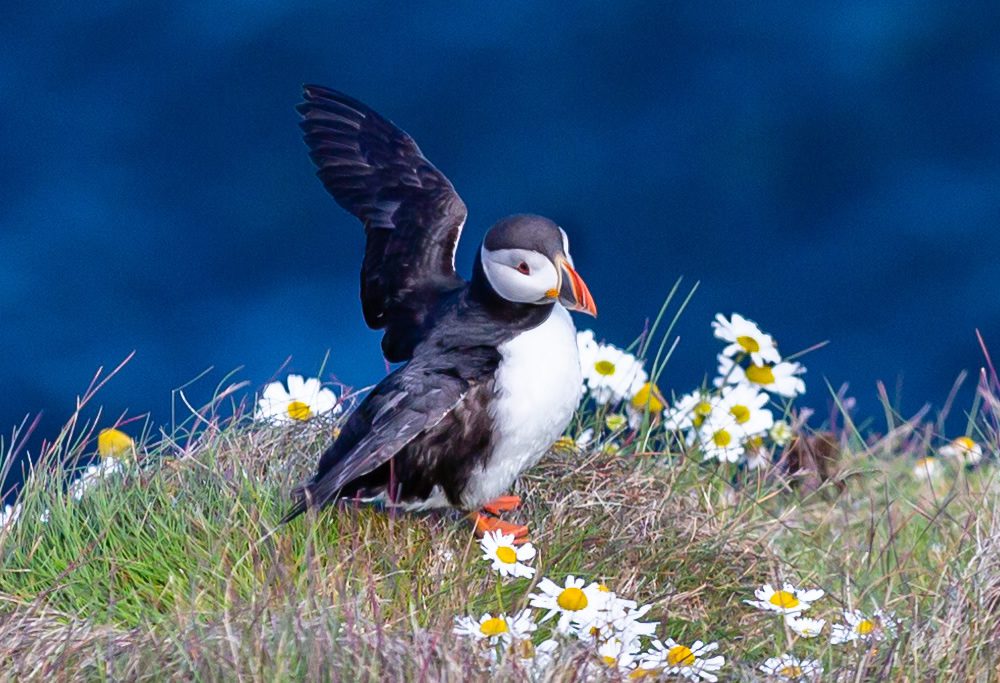
When to See puffins on Rathlin Island: The Complete Seasonal Guide
Every year, thousands of visitors make the ferry crossing from Ballycastle to Rathlin Island with one creature firmly in mind: the Atlantic puffin. With their technicolour beaks, smart tuxedo plumage and endearingly clumsy landings, puffins are among the most charismatic birds in the British Isles — and Rathlin Island is one of the very best places to see them.
But puffins are seasonal visitors to Rathlin. They spend most of their lives out at sea in the North Atlantic, returning to the island’s cliffs only to breed. Get your timing right, and a trip to Rathlin during puffin season is one of those experiences that stays with you for years. Get it wrong, and you’ll find empty clifftops.
This guide tells you exactly when to come, what to expect in each part of the season, and how to make the most of your visit.
When Do Puffins Arrive on Rathlin Island?
Atlantic puffins typically begin returning to Rathlin Island in late March, with the first birds spotted around the cliffs usually appearing in the final week of that month. Numbers build gradually through April as more birds arrive from their winter grounds far out in the North Atlantic.
By late April, the puffins are well established at the RSPB West Light Seabird Centre and can be reliably seen by visitors. This is when the West Light Seabird Centre opens for the season — typically around Easter Sunday.
Month by Month: What to Expect
Late March — First Arrivals
The earliest puffins return to Rathlin, typically in the last week of March. Numbers are low at this stage, but for keen birdwatchers there is a particular thrill in seeing the first arrivals of the season. The island is quiet, the weather can be unpredictable, and the Seabird Centre is not yet open. This is a visit for enthusiasts rather than casual day-trippers.
April — Building Numbers
Through April, puffin numbers on Rathlin build steadily. The birds spend time both ashore at the colony and out at sea, so sightings are not guaranteed on every visit. The Seabird Centre opens around Easter, giving visitors their first opportunity to see the birds from the purpose-built viewing platform. April on Rathlin can be beautiful — wildflowers are emerging, the light is excellent for photography, and visitor numbers are still relatively low.
May — Peak Season Begins
By May, the puffins are in full breeding mode. The birds are incubating their single egg in burrows dug into the clifftop turf, and can be seen both at and around the burrow entrances and flying back and forth from the sea with beakfuls of sand eels. Late May is arguably the single best time to visit Rathlin for puffins — numbers are at or near their peak, the weather is often settled, and the days are long.
June — Prime Viewing
June is the prime month for puffin watching on Rathlin. From mid-June onwards, the puffin chicks — known as pufflings — have hatched, and the adult birds are working hard to feed them, making frequent flights between the sea and their burrows. There is almost constant activity at the colony throughout the day. June also coincides with the longest days of the year, giving visitors maximum time on the island.
July — Still Excellent, Numbers Beginning to Drop
July remains an excellent month for puffin watching, though from mid-July onwards the birds begin preparing to leave. The pufflings are growing rapidly and will soon fledge — typically leaving their burrows under cover of darkness to avoid predators. Adult puffin numbers start to reduce through the second half of July.
August — Last Chance
By early August, most of the puffins have departed Rathlin for the open sea. The West Light Seabird Centre typically closes at the end of August. If you visit in August, particularly in the second half of the month, you should expect significantly fewer puffins than in May or June — though other seabirds such as guillemots, razorbills and kittiwakes remain present.
Best Time to Visit for Puffins: Our Verdict
If seeing puffins is your primary reason for visiting Rathlin Island, the sweet spot is late May to late June. This period offers:
- Maximum puffin numbers
- Active feeding behaviour as birds raise their chicks
- Long days for extended visits
- Generally good weather along the north Antrim coast
- The Seabird Centre fully operational with RSPB staff and volunteers
Practical Tips for Puffin Watching on Rathlin
- Book the ferry in advance — summer crossings fill up quickly, especially at weekends
- Take the Puffin Bus — the seasonal minibus (cash only, approximately £6 return) from Church Bay harbour to the Seabird Centre saves the 4-mile walk each way
- Bring binoculars — while puffins can often be seen at close range from the viewing platform, binoculars let you see the birds’ details and behaviour much more clearly
- Go early in the day — puffins tend to be most active in the morning and can be less visible at midday
- Arrive at the Seabird Centre when it opens at 9:30am — before the day-trip crowds arrive
- Stay overnight — the Seabird Centre at dusk, when the day-trippers have gone, can be magical
About the RSPB West Light Seabird Centre
The RSPB Rathlin West Light Seabird Centre is the hub for puffin watching on Rathlin Island. Located at the western tip of the island above dramatic Atlantic cliffs, the centre provides viewing platforms with close-up views of the seabird colony, friendly RSPB staff and volunteers who can help you spot and identify the birds, and access to the famous upside-down lighthouse.
Entry costs £9 for non-RSPB members (free for members). The centre is open daily from 9:30am to 5:00pm (last entry 4:00pm) from approximately Easter to the end of August.
Beyond the Puffins
Even if puffins are your main reason for visiting, do not rush back to the ferry once you have had your fill. Rathlin Island has 7,000 years of history, dramatic walking trails, three lighthouses and a warm community pub in McCuaig’s Bar. A visit focused entirely on ticking puffins off a list misses much of what makes the island special.